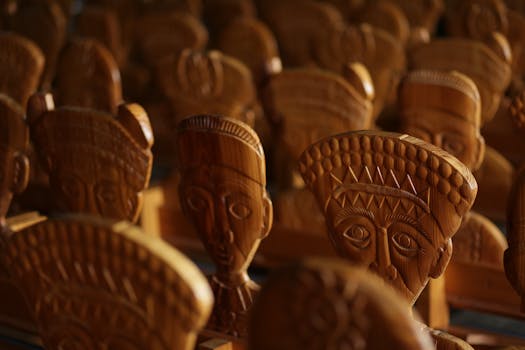
The Cultural Significance of Handcrafted Furniture and Wood Carving Around the World
Handcrafted furniture and wood carving are more than just forms of artistic expression—they are powerful reflections of local history, values, and traditions. Across continents, cultures have developed distinct carving styles, woodworking techniques, and furniture forms that tell stories of their people, beliefs, and environments. In a world becoming ever more globalized and uniform, understanding the cultural roots and societal impact of these crafts is both fascinating and vital.
Global Woodworking Traditions: A Journey Across Continents
From the ornate curvilinear designs of French Rococo to the serene minimalism of Japanese joinery, handcrafted furniture and wood carving have evolved uniquely in different societies. For instance, Indian artisans are renowned for intricate floral and geometric motifs, often created for religious or ceremonial purposes. In contrast, Scandinavia is celebrated for its simple, functional, and clean-lined wooden furniture—a design philosophy known as “hygge.”
In Africa, wood carving is deeply intertwined with spiritual and communal life. The Yoruba of Nigeria, for example, are famous for their carved doors and ritual stools, each symbolizing status and heritage. Meanwhile, Native American tribes, such as the Haida and Tlingit of the Pacific Northwest, carve totem poles that serve as ancestral records and spiritual guides.
.png)
Across Asia, China’s Ming dynasty furniture is lauded for its elegant balance and joinery, while Bali’s woodcarvers create intricate panels and statues rooted in Hindu and Buddhist mythology. In Latin America, the tradition of hand-carved “equipales” furniture, crafted from tanned pigskin and cedar wood, dates back to pre-Hispanic times and endures in Mexican homes and restaurants today.
Symbolism and Storytelling in Wood Carving
Handcrafted furniture and wood carving often carry symbolic meanings far beyond their appearance or function. Each pattern, figure, or joinery technique can encode cultural narratives and beliefs. For instance, Celtic woodworkers used interlacing knots and spirals as protective symbols, while Maori carvers in New Zealand adorned their meeting houses with figures representing tribal ancestors and gods.
In Japan, “kumiko” woodworking involves piecing together small wooden components without nails or glue, forming geometric patterns that symbolize harmony and longevity. The Akira Shrine’s gates in Kyoto, for example, date back hundreds of years and showcase the enduring power of these motifs.
In the Middle East, traditional mashrabiya screens—latticed woodwork used in windows and balconies—combine artistic beauty with practical functions like privacy and climate control, while also representing hospitality and openness.
Economic and Social Impact: Sustaining Communities
The creation of handcrafted furniture and wood carvings is not just an artistic pursuit, but also a significant economic driver in many regions. According to UNESCO, the global handicrafts market was valued at over $718 billion in 2021, with wood carving and furniture representing a significant share. In countries such as Indonesia, Thailand, and Mexico, entire villages depend on woodworking for their livelihoods.
Furthermore, these crafts foster community identity and pride. In Guatemala, the town of San Juan La Laguna has transformed itself into a hub for wood-carved masks and furniture, attracting tourists and supporting local development. Similarly, the Amish communities in the United States are renowned for their high-quality, handcrafted wooden furniture, which sustains local economies and preserves traditional ways of life.
Women are increasingly participating in this sector. In Ghana, for example, women-led cooperatives are gaining recognition for their distinctive carved stools and decorative items, challenging traditional gender roles and contributing to community welfare.
Innovation Meets Tradition: Contemporary Artisans Reimagining the Craft
While rooted in tradition, handcrafted furniture and wood carving are also evolving to meet the tastes and challenges of the modern world. Many contemporary artisans fuse time-honored techniques with innovative designs, materials, and sustainable practices.
For example, in Denmark, designers are blending classic Scandinavian joinery with contemporary forms to appeal to international markets. In the United States, woodworkers are experimenting with reclaimed timber, resin inlays, and digital design tools to create furniture that is both eco-friendly and visually arresting.
Artisans in Vietnam have gained global recognition for their mother-of-pearl inlaid wooden furniture, a technique that dates back to the 16th century but is now being adapted for luxury hotels and modern homes. Meanwhile, in Morocco, traditional “moucharabieh” wood screens are being reinterpreted into contemporary room dividers and wall panels.
This blend of tradition and innovation ensures that the craft remains relevant, inspiring new generations of makers and collectors alike.
Handcrafted vs. Machine-Made: A Cultural and Qualitative Comparison
To appreciate the true value of handcrafted furniture and wood carving, it’s useful to compare them with their mass-produced counterparts. While machine-made furniture offers affordability and uniformity, handcrafted pieces are imbued with cultural richness, individuality, and artisanal skill.
| Aspect | Handcrafted Furniture | Machine-Made Furniture |
|---|---|---|
| Craftsmanship | Unique, detailed, culturally significant | Standardized, minimal human input |
| Materials | Often uses locally sourced, high-quality woods | Frequently uses engineered wood or composites |
| Durability | Built to last generations, repairable | Shorter lifespan, often disposable |
| Cultural Value | Preserves heritage and storytelling | Little to no cultural context |
| Environmental Impact | Lower carbon footprint, supports local economies | Higher emissions, mass production waste |
| Price | Higher, reflects labor and skill | Lower, prioritizes cost efficiency |
The Future of Handcrafted Furniture and Wood Carving in a Digital Age
In today’s digital era, the preservation and revitalization of handcrafted furniture and wood carving face both challenges and opportunities. On one hand, the spread of mass-produced goods and fast furniture threatens to erode traditional skills. On the other, digital platforms allow artisans to reach global audiences, share their stories, and sell their creations directly to buyers worldwide.
Online marketplaces like Etsy, Novica, and 1stdibs have seen a marked increase in demand for handcrafted wooden items. According to Statista, the online furniture market is projected to reach $294 billion in global revenue by 2024, with a growing segment seeking unique, artisanal products.
Educational initiatives are also adapting. Virtual workshops, instructional YouTube channels, and online courses now introduce the next generation to traditional joinery, carving, and finishing methods. In 2022, the Heritage Crafts Association in the UK reported a 35% increase in enrollment for woodworking courses, reflecting renewed interest in the craft.
Furthermore, sustainability concerns are prompting consumers to value long-lasting, responsibly made furniture over disposable alternatives. Handcrafted woodwork, with its inherent durability and repairability, is well positioned to meet this demand.
Appreciating the Cultural Legacy of Handcrafted Furniture and Wood Carving
Handcrafted furniture and wood carving are more than decorative or functional objects—they are living embodiments of cultural heritage, community identity, and artisanal skill. Across the globe, these crafts tell stories, preserve traditions, and foster connections between past and present. In a world of increasing uniformity, choosing handcrafted pieces is an act of appreciation for the unique, the meaningful, and the enduring.
By supporting artisans and seeking out handcrafted work, consumers not only enhance their own spaces but also contribute to the survival and evolution of irreplaceable cultural legacies.